Bring Back Board Games



Catherine Lawson
Across every culture and community, play has always been a fundamental part of the human experience. Even the ancient civilizations understood the value of enjoying downtime together: the Neolithics played get-the-stone-in-hole games to keep them entertained on hunting and fishing expeditions, and the Egyptians moved carved pieces round a board which represented the journey to the afterlife. Sometimes there was religious or spiritual significance in the games played and sometimes the goal was to develop strategic thinking with a strong moral code. Whatever the underlying lesson, games have always been a way for us to connect in social groups and to make memories which last long after all the pieces have been packed away.
As a child of the 70s I grew up surrounded by board games. My brother and I spent many rainy afternoons locked in battle over one board or another, my mum silently praying we’d get to the end of the game without bickering. I recall one particular occasion when we were playing Sorry (who else remembers that?) and it wasn’t going so well. My mum, who had clearly had enough of our quarrelling that day, walked past the tiny table on which our game was balanced and without saying a word flipped the whole board, pieces and all, into the air with one quick flick of the hand. We watched, stunned, as pieces scattered around us. There was some wide-eyed tidying up, the two of us suddenly united in our child-like disbelief. To be fair, we had been warned. Many times.
I’m happy to report that the odd flying board aside, the games which filled my childhood were a source of great fun and excitement, particularly during the cold, dark months which saw us all hunkering down inside. As a family, we all had our favourites ranging from a fast round of Snap which left us in helpless giggles, to a game of Monopoly that had the potential to last all afternoon (I’m sure my parents quietly wept when we suggested that one).
The games we played changed through the years, shifting from the simple fun of Frustration and Operation to the challenges of Battleships and Mastermind. What they all had in common, though, was the ability to bring us together. It wasn’t the games themselves that we loved most as kids – it was sharing our play with our parents and having their undivided attention along the way. It’s what all children crave, and it’s what we risk losing in a time which favours screens.
Today, as phones, computers, and TVs dominate the entertainment side of things, the moments of screen-free time which once filled our homes can easily get lost. We might find comfort in binge watching favourite TV shows, endlessly scrolling through social media feeds, or playing video games that shut out the rest of the world, but when we switch off like that, we also tune out potential moments of meaningful connection with the people we love. When that happens, we miss out on the benefits of being completely present in the room, building stronger emotional bonds through shared victories, silly jokes and gentle teasing. And as multi-generational groups once did so naturally, we miss out on the opportunity to learn from one another, sharing stories and engaging in play as equals, regardless of age. There may well be tantrums and sore losers along the way but that’s when we’re presented with a safe context in which to teach the younger (and sometimes remind the older) generation important life skills such as turn taking, teamwork, patience, winning, losing, sharing… Or indeed how to flip a board with one hand when it’s time for a break.
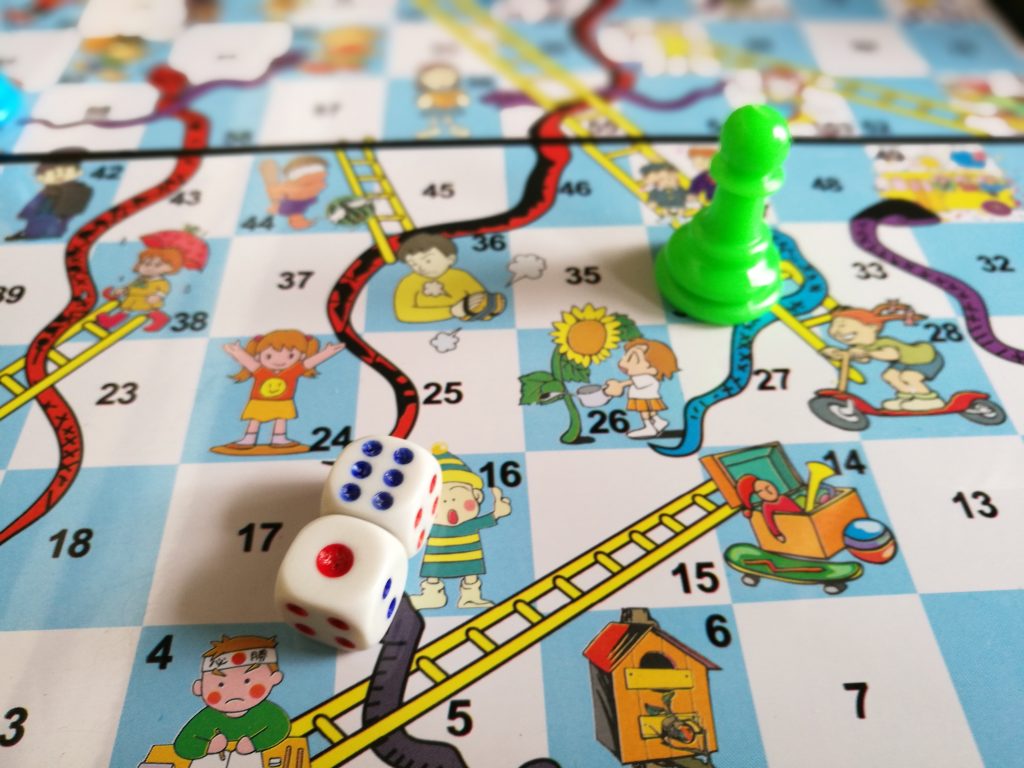
As we head deep into the cold grey months of winter, stuck inside with the festivities all behind us, it’s the perfect time to slow down, unplug and rediscover the simple joy of board games.
As we head deep into the cold grey months of winter, stuck inside with the festivities all behind us, it’s the perfect time to slow down, unplug and rediscover the simple joy of board games.
And because it’s something which doesn’t happen so frequently in our faced-paced modern lives, there’s an opportunity to make it special – a time marked by the setting aside of distractions and the collective commitment to enjoying time together. It might be that we introduce new traditions where we ring fence half an hour after dinner to stay at the table and play. Or perhaps we make Sunday afternoons the time when we bring family together for an extended games afternoon, making it more of an occasion – something to look forward to as we approach the weekend (will you finally beat Uncle Bert at Scrabble?), and something to launch us into the week ahead on a happier note.
Those of us old enough to remember the glory days of board games are blessed with the kind of nostalgia which encourages us to recreate those cherished childhood traditions. We do it so the youngest in our families can experience the joy of the family game culture which exists beyond the digital world. We do it so we can see in them the excitement we remember in ourselves – the thrill of being the one to choose the game for the whole family, or to teach a grandparent how to play something new, or to see their name at the top of the league table. And we do it because we still feel that same excitement ourselves as we settle in round the kitchen table, snacks at the ready, for some good old-fashioned fun with the people who matter most.