Turning Over a New Leaf



Big range, bold design and built right here in the UK. Meet the new Leaf.
The sleek new Leaf is only the fourth model to qualify for the full £3,750 grant from the UK Government
When the first Nissan Leaf arrived more than a decade ago, it was something of a pioneer. It was bold, slightly quirky and carried the weight of early electric hopes on its compact shoulders. Fast-forward to the end of 2025 and the Leaf has grown into a far more confident proposition. Still built in Sunderland and still proudly British, the new model feels like a car ready to meet the electric age on its own terms.
The design is the first sign that this Leaf means business. It still carries a few familiar cues, yet everything feels cleaner and more grown-up. The lines are sharper, the body sits a little more assertively on the road and the whole car has a sense of purpose that previous versions hinted at but never fully captured. It looks modern without trying too hard and stands out in a market filled with increasingly anonymous EVs.
Step inside and the cabin immediately feels calmer and more spacious. The flat floor provides surprising room for passengers, while the sweeping display across the dashboard adds a contemporary touch without overwhelming the driver. The technology feels current, with smooth smartphone integration, built-in Google services and navigation that tracks real-time charging information. It is smart, simple and focused on everyday practicality.
The real headline figure is the range. With the larger battery option, the new Leaf can travel up to 386 miles on a single charge under WLTP testing. This places it ahead of many similarly priced competitors and removes much of the anxiety once associated with electric cars. Charging times are solid too, with a 20 to 80 per cent top-up taking around half an hour on a rapid charger.
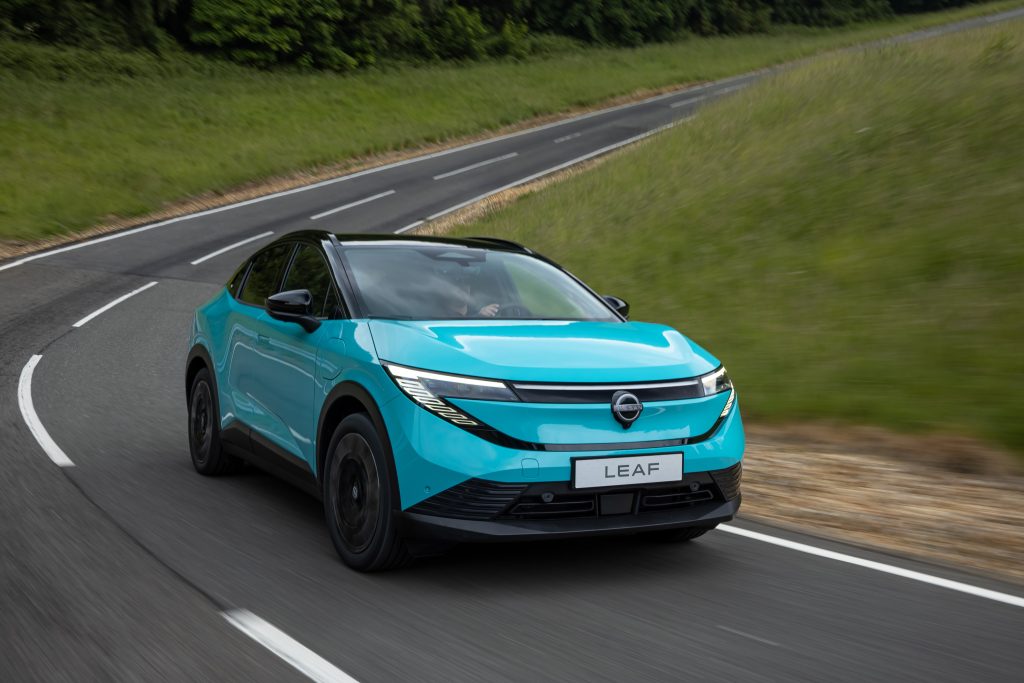
Price will be another major draw. At around £32,245 after the Government’s grant, the Leaf becomes one of the most affordable ways to enter long-range electric motoring. In a world where EV prices often feel out of reach, it stands out as excellent value.
On the road, the Leaf feels settled and reassuring. Steering is light in town but firms up when the pace increases. Ride comfort is impressive, smoothing out bumps that many electric cars tend to highlight. It is not designed to be a sports car, nor does it pretend to be. Instead, it focuses on relaxed, effortless driving that suits everything from school runs to long motorway stretches.
Practicality is another strength. The boot offers generous space for a hatchback and the rear seats can comfortably handle adult passengers. Taller passengers may notice the slightly sloped roofline, but overall the space feels well considered and suitable for everyday family use.
The Leaf also represents a positive chapter for British manufacturing. Nissan’s Sunderland plant continues to play an important role in the UK’s automotive industry, and the new model reinforces the brand’s long-term commitment to building here. With so many EVs imported, it is refreshing to see a home-grown option continue to evolve.
Ultimately, the new Nissan Leaf arrives at the perfect moment. Electric cars are no longer niche or experimental. Drivers want range, value and something that fits easily into daily life. The Leaf delivers on all three. It is mature without being dull, modern without being overwhelming and offers a genuine alternative for anyone looking to move away from traditional petrol or diesel.
It is the kind of car that feels designed for real people with real routines. Whether you are a commuter, a parent or simply curious about going electric, this Leaf makes the switch feel natural. If the original Leaf opened the door to electric motoring, this latest version walks confidently through it.
Key Specifications
Battery options
52 kWh and 75 kWh
Maximum range
Up to 386 miles
(WLTP, larger battery)
Power output
Around 215 bhp for
the 75 kWh version
Torque
Approx. 355 Nm
0 to 62 mph
Around 7.6 seconds
Boot space
About 437 litres
Charging
20 to 80 per cent in roughly
30 minutes on a rapid charger
UK starting price
Around £32,245 after grant