


Kilmarnock’s Scottish Cup glory, his remarkable football journey and a life in the game
Callum McFadden
From Easterhouse to an unforgettable afternoon at Hampden and a second chapter in African football, Bobby Williamson has experienced a career full of highs, lows and unexpected turns. In an exclusive interview with Ayrshire Magazine, the former Kilmarnock manager reflects on the historic 1997 Scottish Cup triumph, the supporters who made it special and the new autobiography telling his story in his own words.
There are certain moments in football that never leave you. For Bobby Williamson, one of them came at Hampden in May 1997, when Kilmarnock ended a 68-year wait to lift the Scottish Cup.
Nearly three decades on, the significance of that achievement remains undiminished. Indeed, Williamson believes the passage of time has only reinforced just how special it was.
“The people who witnessed that day have never seen it again,” he reflects. “They’ve never seen the Scottish Cup since. It’s been almost 30 years now. It was a fantastic day, absolutely tremendous.”
Williamson remains immensely proud of his part in creating a piece of Kilmarnock history that has endured across generations. The players who lifted the trophy that afternoon remain the only living Kilmarnock players to have won the Scottish Cup.
“To be part of that team that actually did it is a huge privilege,” he says.
His affection for the club remains clear. Williamson has recently returned to Rugby Park where he received a warm welcome from supporters who continue to cherish memories of that unforgettable afternoon.
“I loved my time at Kilmarnock as a player and as a manager,” he explains. “The fans were fantastic and meeting them again over the last week or two has been wonderful. They’ve shared their memories with me and vice versa.”
For Williamson, those encounters are a reminder that football’s greatest achievements are not measured solely in silverware. Trophies matter, but the lasting connection between a club and its supporters is what gives those moments their meaning.
“The fans are the most important people at any football club,” he says. “Players come and go because that’s the nature of football, but the fans are always there and always will be.
“If you can win a game or a trophy and make them happy, giving them an opportunity to think about something other than the working week or the usual stresses and strains of everyday life, then that’s a wonderful thing.
“I’m fortunate that I was able to do that at Kilmarnock and at various points in my career.”
One memory, in particular, underlines the emotional significance of Kilmarnock’s Scottish Cup success.
Williamson recalls an older supporter who regularly watched the team train. In his 60s when the club finally ended their long wait for the trophy, the man approached Williamson after the victory with a simple but powerful message: he could die happy. It is a memory that has stayed with the former manager ever since.
“That brings it all home to you as a football player, coach and manager,” he says. “You’re trying to make a living and enjoy it the best you can, but to get that reaction from one individual, and we got it from thousands of people, gives you a great sense of satisfaction. You’ve actually made them happy, and made them happy for a long, long time.”
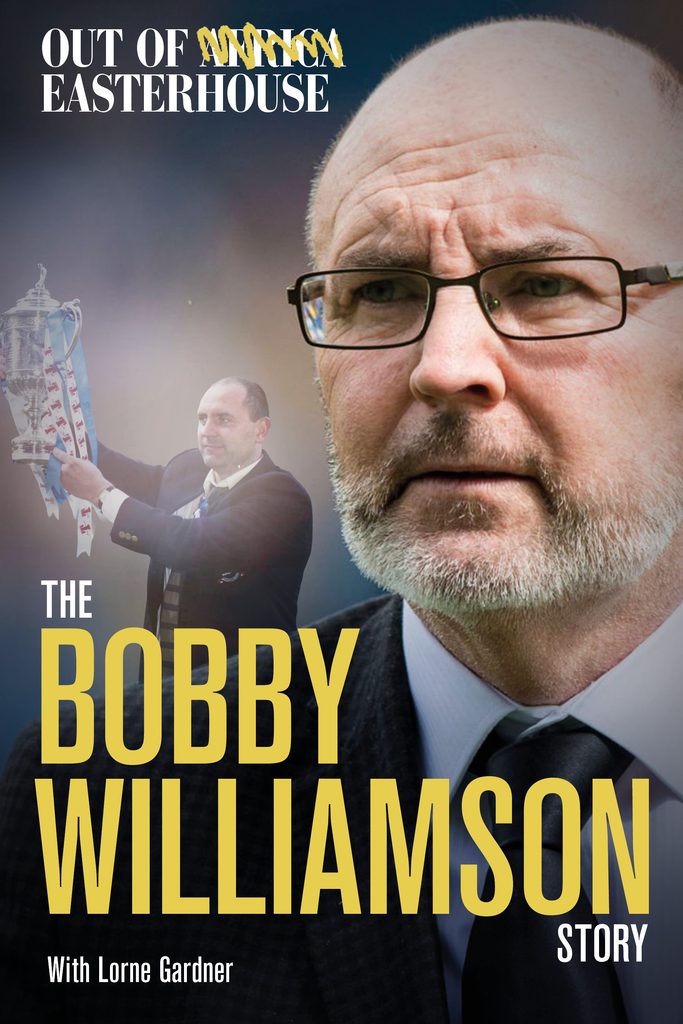
It is this human side of the game, as much as the major milestones, that forms part of Williamson’s new autobiography. The book offers an opportunity to revisit a career that has taken him across continents, brought him into contact with some of Scottish football’s most recognisable characters and tested him in ways that extended well beyond the pitch.
Writing it, however, has not always been straightforward.
Williamson admits that putting his life story on paper has meant confronting uncomfortable memories alongside the moments of which he remains immensely proud. His intention was never to produce a version of events that glossed over the difficult parts.
“I wrote it, and it’s all honest,” he says. “Every word is true. There are parts I’m very proud of and others I’m not so proud of. But if you’re going to write a book like this, you have to give it everything you’ve got.”
That willingness to reflect honestly extends to the managers who shaped his own football education. Among them was Jock Wallace, the legendary Rangers boss who signed Williamson for £100,000 and gave him the opportunity to work under one of the most influential figures in Scottish football.
“Big Jock’s a legend and always will be,” Williamson says. “He could make you run through a brick wall for him because that’s what he demanded and what he would give you. He would back you to the hilt, and you had to back him to the hilt.”
Williamson’s own career would eventually take him well beyond the familiar surroundings of Scottish football. An opportunity to work in Uganda opened up a new chapter, introducing him to different football cultures and challenges that broadened his perspective on the game.
His experiences in Uganda and Kenya remain an important part of his story, offering a reminder that football’s reach extends far beyond the European game that dominates much of the attention at home.
“Africa opened up new horizons for me,” he says. “People back here don’t realise how strong African football is, how good these players are and what their capabilities are.”
The experience also brought international ambitions, including attempts to guide Kenya towards the World Cup. It was an opportunity that Williamson believed could have delivered a significant achievement, but circumstances ultimately conspired against his side.
One particularly frustrating episode came against Cape Verde. Having beaten their opponents at home, Kenya travelled for the return fixture under extremely difficult conditions.
The journey involved a lengthy flight with several refuelling stops, and the players arrived just two hours before kick-off. Preparation was far from ideal, leaving Williamson frustrated by the circumstances surrounding such an important match.
“There was no food on the flight,” he recalls. “The preparations were a shambles.”
Kenya lost 2-0, ending their hopes of progressing.
“It would have been a fantastic achievement and experience,” Williamson says. “But we simply weren’t prepared to be successful.”
It is an example of the fine margins that can shape a football career. For every memorable victory, there are setbacks and missed opportunities that linger long after the final whistle.
Williamson has experienced enough of both to understand the peculiar relationship managers develop with the game. The demands are relentless, the scrutiny can be unforgiving, yet the pull of football never quite disappears.
“When you’re involved in football and you’re out of football, you want to get back in,” he says. “When you are in it, you want out because of the criticism that comes with it. Then you realise you miss it. It’s in your blood.”
For a man, whose career has encompassed playing, management and international football, that connection is difficult to escape. The game has taken him from Easterhouse to Rangers, through his memorable years with Kilmarnock and into a second footballing life in Africa.
Now, his autobiography offers an opportunity to bring those experiences together, preserving the triumphs, frustrations, lessons and personal encounters that have defined his journey.
There is a particular significance in returning to Kilmarnock at a time when memories of the 1997 Scottish Cup triumph remain so powerful. The passage of nearly 30 years has done little to diminish the achievement or the affection supporters retain for the people who delivered it.
For Williamson, the pride comes not simply from having been part of a historic team, but from knowing what that success meant to an entire community.
His story is one of ambition, opportunity and resilience, shaped by the unpredictability that makes football such a compelling profession.
“It’s a game you think you know about, but you don’t know everything,” he says. “You’re always learning.”
From the streets of Easterhouse to Scottish Cup glory at Hampden, and from the pressures of management in Scotland to the challenges of international football in Africa, Williamson’s journey has been anything but ordinary.
Now, through his new autobiography, he is ready to tell that story in his own words and to revisit the moments that made his life in football so memorable.
Bobby Williamson’s book Out of Easterhouse is available from Pitch Publishing and all good bookstores.