The Lotus Cortina



A 1960s Motorsport Legend
Ronnie Russell
The Swinging Sixties brought a wave of cultural change that helped shape the modern world. It was a decade defined by innovation, creativity and a new sense of freedom. Music, fashion, technology and industry all underwent remarkable transformations, creating an era that continues to captivate people today.
In music, the 1960s saw British bands conquer the world. The Beatles, The Rolling Stones and The Kinks became global icons, producing timeless songs that still influence musicians generations later. Fashion also underwent a revolution, with Mary Quant’s groundbreaking designs and the arrival of the miniskirt becoming symbols of a bold new age.
The automotive industry experienced its own golden period. Driven by post-war economic growth, car manufacturing expanded rapidly, with huge assembly lines producing vehicles for an increasingly affluent public. Cars were no longer simply a means of transport; they had become status symbols that reflected individual lifestyles and aspirations.
At the heart of Britain’s automotive boom stood Ford. During the 1960s, Ford was a manufacturing giant, playing a major role in the nation’s economic success. Its vast Dagenham plant, the largest manufacturing site in Europe at the time, produced some of the decade’s most recognisable vehicles, including the hugely popular Ford Cortina.
While the standard Cortina was a success in its own right, one version would become a true motoring legend. Released in 1963, the Mk1 Lotus Cortina, officially known as the Type 28, was the result of a remarkable collaboration between Ford and Lotus founder Colin Chapman.
Created to homologate the car for Group 2 saloon car racing, the Lotus Cortina combined a lightweight Ford Cortina bodyshell with Lotus engineering expertise. The result was a machine that was revolutionary for its time. Lotus fitted the car with its highly advanced twin-cam engine, delivering performance levels that transformed the Cortina into one of the most exciting sports saloons of the era.
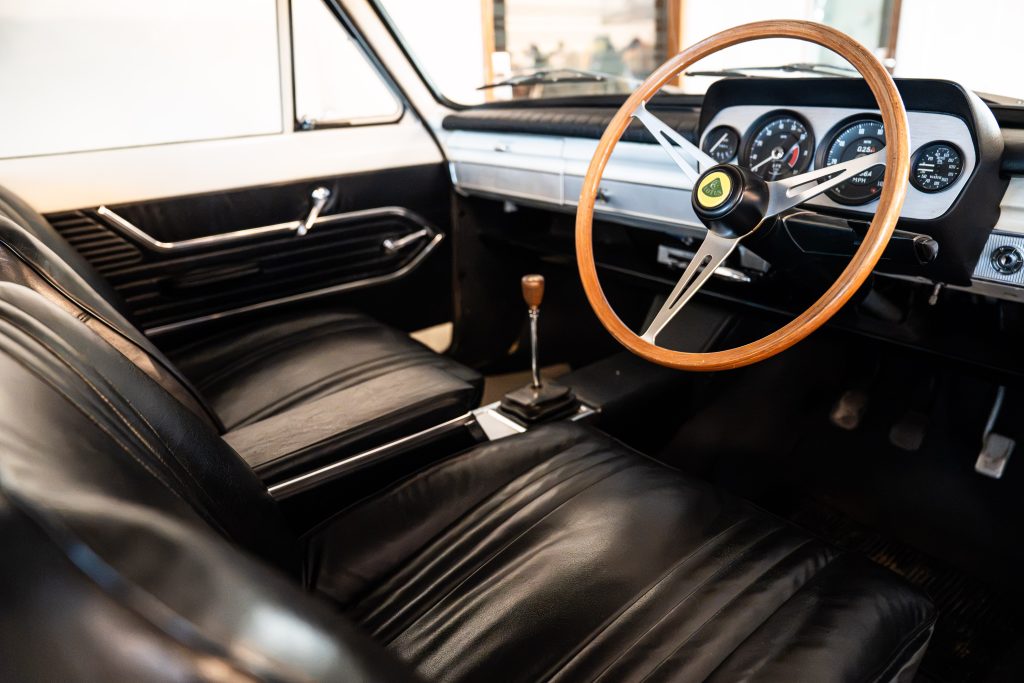
Early examples were highly specialised by 1960s standards. Aluminium doors, bonnet and boot lid reduced weight significantly, helping the Lotus Cortina tip the scales at just over 900kg. Lightweight, agile and exceptionally powerful for its size, it quickly became one of the most competitive saloon racing cars in the world.
The Lotus Cortina was built as a track weapon, and in the hands of legendary drivers it became virtually unstoppable. Motorsport greats such as Jim Clark, Sir Jackie Stewart and rally star Roger Clark all drove the iconic machine. Whether on racing circuits or rally stages, the Lotus Cortina consistently punched above its weight, often defeating much larger and more powerful rivals, including the formidable 3.8-litre Jaguars that had previously dominated saloon car racing.
Part of the car’s enduring appeal lies in the driving experience. Owners and enthusiasts often describe the Lotus Cortina as exhilarating and engaging. Its free-revving Lotus-tuned engine, distinctive rasping exhaust note and superb handling created a unique connection between driver and machine. It was a road car that felt like a racing car, a concept that was revolutionary at the time and one that influenced Ford’s motorsport philosophy for decades to come.
Crowds flocked to racing circuits to witness the Lotus Cortina in action. The car became famous for its dramatic driving style, often cornering so aggressively that the inside front wheel would lift clear of the ground. Spectacular high-speed drifts and wheel-lifting photographs of Jim Clark and Sir Jackie Stewart remain among the most iconic images in British motorsport history.
The Mk1 Lotus Cortina was instantly recognisable thanks to its distinctive colour scheme. Production cars were finished in Ermine White with Sherwood Green side stripes, creating one of the most famous liveries ever seen on a British performance car. However, Ford and teams such as Alan Mann Racing also built a small number of works racing and rally cars in a striking red and gold colour scheme.
One of these famous competition cars survives today. The FIA-specification historic touring car, driven during its career by legends including Sir Jackie Stewart, Frank Gardner, Sir John Whitmore and Jacky Ickx, is on display at the world-renowned Moulsdale Foundation Museum.
The Lotus Cortina’s competition record is equally impressive. In 1964, Jim Clark drove a works Team Lotus-prepared Mk1 Lotus Cortina to overall victory in the British Saloon Car Championship. The following year, Sir John Whitmore secured the European Touring Car Championship title for Alan Mann Racing. The car also collected numerous national touring car and class championships around the world, including major successes in South Africa.
Yet the museum houses another Lotus Cortina with an entirely different claim to fame. One particular 1963 example is believed to have been used by Great Train Robbery mastermind Bruce Reynolds while scouting and planning the route for the infamous robbery.
The car reportedly served as a reconnaissance vehicle in the Herefordshire countryside before the robbery of the Glasgow-to-London mail train in August 1963. Around 125 mail sacks containing approximately £3 million in used banknotes were stolen — a figure worth around £40 million in today’s money.
Although the Lotus Cortina was never used as a getaway vehicle, it played an unexpected role in the investigation that followed. Tyre tracks discovered near the scene were preserved using plaster casts and later matched to Reynolds’ Lotus Cortina. Similar forensic evidence linked other vehicles used during the robbery, including Land Rovers and a getaway van.
Perhaps the most famous piece of evidence was discovered at the gang’s hideout farmhouse, where investigators found fingerprints on a Monopoly board used by members of the gang. The fingerprints helped identify those involved, ultimately leading to arrests and convictions.
Today, Bruce Reynolds’ Lotus Cortina remains a fascinating piece of British motoring and criminal history. Remarkably, it is believed to have covered only around 3,000 miles from new and may still wear the original tyres linked to the investigation. Purchased for approximately £1,100 in 1963, the car is now estimated to be worth well in excess of £200,000, thanks to its unique place in both motorsport and British history.
More than sixty years after its debut, the Mk1 Lotus Cortina remains one of the greatest performance saloons ever built – a symbol of a remarkable decade and a true legend of the 1960s.