


Chris Palmer
“I killed forty of them and I felt good about it.”
There had been gentle, good-humoured conversation around the breakfast table, but suddenly there was a stunned silence. I am very fond of my son’s mother-in-law, but this was a revelation. She was a cold-blooded killer and, moreover, was proud of it. I felt obliged to administer the usual caution.
“Anything further you may say can be taken down in evidence and be used against you.”
To use a current political term, not only did Lynne repeat it, but she also doubled down on it. Apparently, it was them or her, and in that equation, there was no hesitation.
There proved to be mitigating circumstances. Murder, though, is murder. Some less generous folk might suggest that if she chose to have a fruit and vegetable garden in the middle of the countryside, she should accept the circumstances.
Sandy is a good friend with an enviably colourful, tidy and productive garden close to Ayr town centre. When I golf with him, he is mild-mannered and phlegmatic about the vicissitudes of a very challenging game. If his ball lands in a tough greenside bunker after a bad bounce on a links course, and a few hefty swipes with his sand iron fail to move it, he will adopt the demeanour of the man with a Hamlet cigar from the ads of the seventies and wistfully shrug his shoulders.
At night, however, his character changes. Before he goes to bed, he dons a head torch, and becomes a cross between Victor Meldrew and Corporal Jones. Gimlet-eyed and armed with long nose pliers, he heads for his much prized but vulnerable rhododendron bush with murderous intent.
With both Lynne and Sandy, earlier in the summer, I had been complaining in a vigorous manner about the damage being reeked on my dahlias by slugs. They were surprised by my passive, defeated tone. In their opinion it was war, and they were not interested in taking prisoners.
“What are you, man or mouse?” they seemed to be saying.
With Lynn it was war against bank voles having midnight feasts with her strawberries. With Sandy it was vine weevils, threatening the life of his prized rhododendron bush, summarily executed with a satisfying ‘squish’.
I suspect that many of us have a breaking point, and they had reached theirs. Gardening can do that to you. There is a persistent fight against pests and diseases. The roll call of pests that bother me, and probably many gardeners, includes birds (in particular, pigeons), slugs, aphids such as blackfly and greenfly, rabbits, squirrels, mice and eelworms.
Fighting back requires planning.
The advent of the iPod and then Spotify has made many CDs redundant. Will I ever play Showaddywaddy’s Greatest Hits again? Tender young vegetable plants and sweet pea seedlings are vulnerable to pigeons. They do not like to see their reflection, so I hang up old CDs in a row in front of the plants. It seems to be effective.
When my potatoes are ready, I now tend to dig them all up as soon as possible and store them rather than leave them in the garden where eelworms can cause damage. It also frees up the ground for a late sowing of beetroot or turnips.
Mice can destructively nibble young vegetable shoots such as peas. I use holly branches pegged close to the ground in an attempt to deter them. Whether it does or not I cannot be sure but it makes me feel better.
Although it can be messy, I simply wipe off greenfly and blackfly with a wet soapy cloth, and keep my fingers crossed. I no longer use pesticides.
As far as plant diseases are concerned, I am resistant to using chemicals. I try to maintain a healthy environment. I feed both flower borders and my vegetable patch so that the stronger the plant, the more resistant it is to disease. Sometimes I just grin and hope.
I have become more tolerant of weeds. The advent of rewilding in recent years has encouraged gardeners (and organisations such a South Ayrshire Council) to be more tolerant of the natural world, and to return patches of land to a more natural state.
We have an area of grass. I am reluctant to call it a lawn. In the winter it used to be very wet and soggy. I improved its drainage. We used to have a lot of moss, now we have a new ‘friend’. It is called selfheal; it has a captivating Latin name – Prunella Vulgaris. It has small violet-blue flowers and can spread quickly. The bees love it. We are going to tolerate it. Maybe one day there will be no grass, just selfheal. We need bees. Time will tell.
Despite being brought up in council houses in the south of England, my parents, my brother and I were lucky enough to enjoy good size gardens. We always had at least three large apple trees. As a result, I feel that apples have always been a part of my life. In our new home, we inherited three very mature apple trees. I do not know the varieties. One was too old to retain. We cut it down and retained the logs, which a year later burnt beautifully with a distinct aroma. A friend recommended a dessert variety called ‘Katy’ to replace it. It is doing well. I found space for two more. Another dessert variety – ‘Discovery’ and an old cooker favourite – ‘Bramley’. The South Ayrshire climate seems to suit them, so I am happy to recommend them.
Although my mother made copious jars of bramble and apple jelly using our home-grown apples and local brambles, she never made chutney. She made marrow and ginger jelly which sadly is not to my taste, not really enjoying ginger. In the last few years, I have discovered that making chutney is quite straightforward, as long as you are not averse to vinegar. Last year my favourite was apple and fig. Recipes are easy to find on the internet.
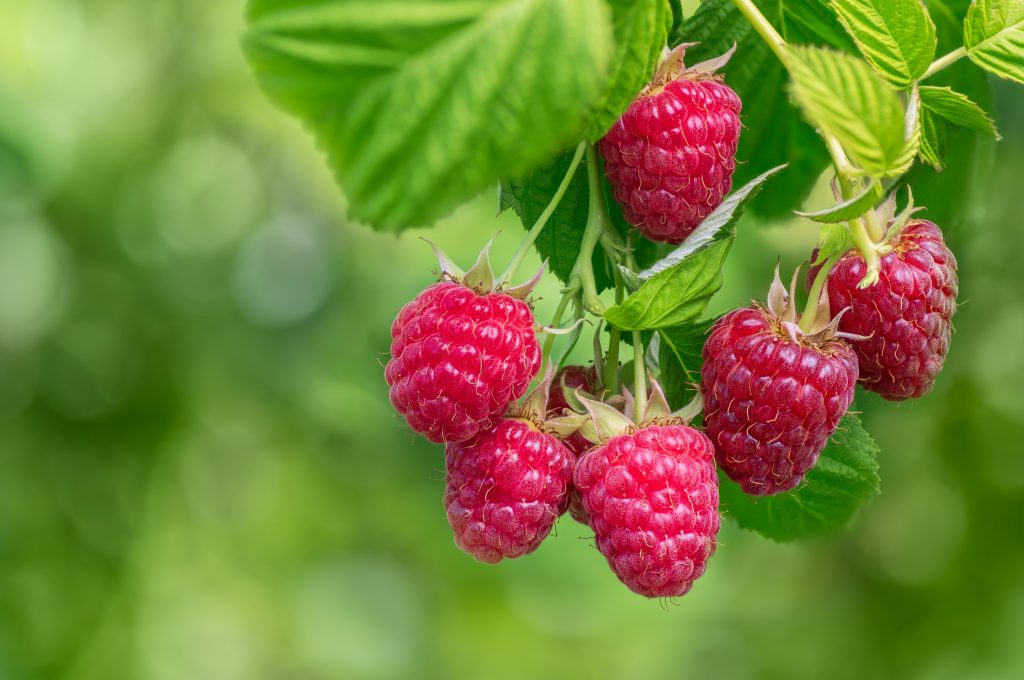
Three years ago, my friend Sandy, the weevil murderer, gave me a dozen autumn fruiting raspberry offshoots. I had not tried them before. I duly planted them in late winter during a mild spell with no great expectations. The variety is ‘Joan J’. I was really surprised to find that they were very productive in their first year and continue to be very successful. I cut them right down at the end of the year and then cover them with a seaweed mulch. They seem to fruit right into November. I would strongly recommend them to anyone with room to plant a row. Six plants two feet apart should produce a good return.
Summer is becoming a distant memory. How was it for you in the garden? What lessons did you learn? Will you do anything different next year? Already it is time to think about the new year. In our next edition I will explain why a bulb lasagne can give you great pleasure next spring.