

Chris Palmer
I’m standing in a local supermarket. My trolley is brimful of food and drink. I’m tired and desperate to get home, have a coffee and read the papers. It’s raining, the skies are leaden, and I’ve had to park a long distance from the entrance. I’m wondering why I volunteered to do the shopping but can understand why my offer was so readily accepted. The tills are busy. The queues are long. There is a million-dollar question to confront: Which queue do I join?
My brain cells work overtime to consider all the trolleys in each queue. Are there any items that will cause extra delay? Is the checkout operator looking fast or slow? There are several factors to consider, and I have only a few seconds to weigh them up. I make my decision, shuffle forward, and cross my fingers. Finally at the counter, I unload my purchases. I won the race. I’ve saved precious minutes of my life. It is such a small triumph, but it puts a smile on my face. Are you the same?
The power of small victories should not be under-estimated. And it applies to gardening in more than one way.
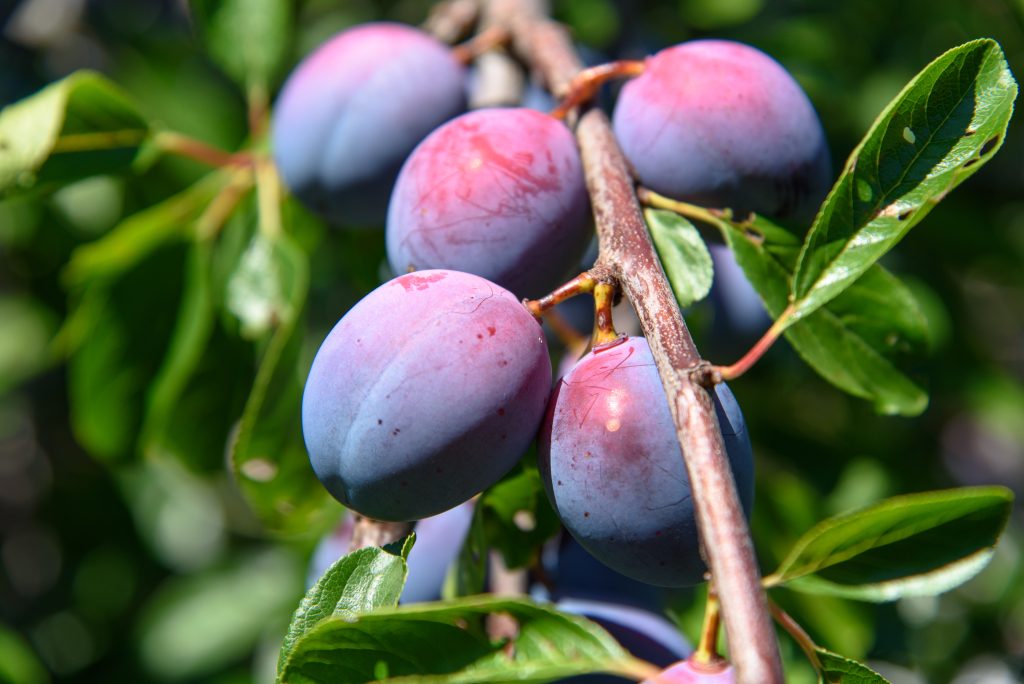
There was as a plant sale in a large garden centre a while back. It was late autumn. In the last few years, mainly because of energy price hikes, young fruit trees have shot up in price. A few in this store had not sold. The stock was being cleared for Christmas trees. The reduction was up to seventy-five percent. One Victoria Plum sapling was left. Pot-bound, it looked uninspiring. I lifted it up. It had been in the shop a year or so too long. According to gardening wisdom it would now be too late to plant it. There had been nearly two weeks of heavy rain, the ground was sodden and December was round the corner with the risk of heavy frosts. It was unlikely to survive, but… there was sixty quid off! I went for it. I planted it immediately. I mulched it with a pile of rotted-down leaves and kept my fingers crossed.
Looking out now I can see my tree. It survived the last winter, has gained a foot in height, and I can see tiny buds appearing. Maybe this year we might get a little fruit. Watching it continue to flourish will give me extra pleasure. I beat the odds, the weather, and the received wisdom. Moreover, I got a bargain!
Two years ago, in early spring, I was looking for a small plant pot. I spied one, the right size, under a hedge in the corner of the garden. Pulling it out, I saw that some compost had been left in it. Scrutinising it, I spied a tiny shoot peeping out. I had no idea what it was but, on a whim, decided to nurture it. Six months later the shoot had grown and from the miniature leaves I was able to identify a fledging horse chestnut sapling. There are no chestnut trees near our house. Almost certainly in the previous autumn an absent-minded squirrel had carried a conker from a nearby copse into our garden, spied a useful mini larder, buried its future meal in it, and then forgotten about it.
The sapling is now eighteen inches high, and I have it planted in the garden. Sometime in the future it will be too big for the garden, but I’ll be long gone by then. In the meantime, this treat, a gift from a scatter-brained squirrel, will give me particular pleasure.
Cheating the seasons is another type of small victory, if it works. It is customary to try this with rhubarb. This is the time of year to consider doing it. Most reasonably sized gardens have room for a crown of rhubarb. A good feature of the plant is that it flourishes in a shady spot, as well as in full sun. It can be planted in a corner and be forgotten about. It is not everyone’s favourite, but if you enjoy the flavour and have an appropriate place, a single crown can be very rewarding.
Though it is late winter, the procedure, known as ‘forcing the rhubarb’ can start now and will give you rhubarb a month or so earlier than a conventional plant will. It should start as soon as the short, fat buds are beginning to swell at the base of the crown. Forcing involves creating an artificially dark and warm microclimate for the individual plant. This is achieved by covering it with either a large, upturned flowerpot or bucket. The drainage holes of the flowerpot need to be blocked.
This year, for once, I have the use of a borrowed Victorian style, bell-shaped, purpose made terracotta pot. It is fifty centimetres high, with a removable lid for checking the progress of growth. Deprived of light, but with warmth, the rhubarb stems reach upwards in a desperate search for light. The result is pale, very tasty stems. If you’re thinking it sounds a bit cruel, I am inclined to agree. However, when it is over the plant has a rest, and is given a good nitrogen-based feed. There is, after all, a payback and thanks. I will not do this to the plant next year as the process puts extra strain on it.
It is about this time of year that gardening companies send out catalogues and there are adverts in papers, magazines and on the internet. Since ‘lockdown’ there appears to have been a growth in the interest in home-grown vegetables, potatoes in particular. The temptation is to order seed potatoes rather than buying them from a garden centre or nursery. My personal experience suggests it’s better to do the latter. Buying online usually involves buying more than you actually need, and one cannot be confident of their quality. I like to handle them myself, make sure they are firm and of a good size, maybe no bigger than a duck’s egg.
One of the pleasures of buying them loose is that you can try a few varieties, at very little cost, and gauge which particular one suits your soil, and of course your taste buds. After many years of growing tatties in various gardens I have not found one to beat Charlotte. It is a pear-shaped salad potato with a waxy flesh. We tend to deliberately boil more than we need for one meal as they are perfect for frying the next day and go well with cold meat and chutney.
In the next edition I will beat the drum again for dahlias and consider the vast range of tomato varieties that can be grown in a reasonably sized greenhouse. In the meantime, I wish you an inspiring and successful gardening year.