


Catherine Lawson
The crunch of dry leaves underfoot transports me back to a time when, as a wee girl, I would kick my way through the windswept leaves of autumn in my yellow wellies, delighted by the crackling noise and the wonder of green leaves which had magically turned red and gold. Living near the woods it was easily my favourite time of year; a time when we would wrap up warm in scarves and gloves and wander into the depths of the forest to find all kinds of small miracles. Glossy chestnuts, perfect acorns like the ones in the story books, and signs of woodland creatures nearby – it was endlessly enchanting.
I may not kick my way through the leaves anymore (at least not when anyone’s watching), but I’m still filled with the wonder of autumn when I step into the woods to take in the sights, sounds and smells which signify the slowing down of the world around us. It’s an invitation to exhale. And when we slow our steps, our thoughts and our breathing, we take in the world around us in a whole new way.
Mossy greens, burnished browns and gentle ochres help quiet the mind as we lose ourselves in softer hues, and the musky scent of freshly trodden earth fills the air as we trundle through a carpet of leaves, breathing deeply to let the chill and the smell of the woods fill our lungs. It’s then we start to notice the magic around us – pretty frost patterned pathways and bare branches glistening with spider’s webs; the fresh scent of pine needles and a forest floor exhaling clouds of mist as if it, too, is breathing into a chilled blue sky.
Beyond the joy of the walk itself there are hidden wonders ready to be discovered by those brave enough to venture out in search of sustenance deep in the woods. If you’ve ever foraged, you’ll know that it’s mindfulness in action as you scan the land around you, searching for golden mushrooms growing at the base of old oaks, gem-coloured berries buried deep in the hedgerows, or a carpet of fresh green wood sorrel lying low under the shade of the trees. There are treasures to be found for those who are willing to look, and as you search you realise you have emptied your mind of all other thoughts.
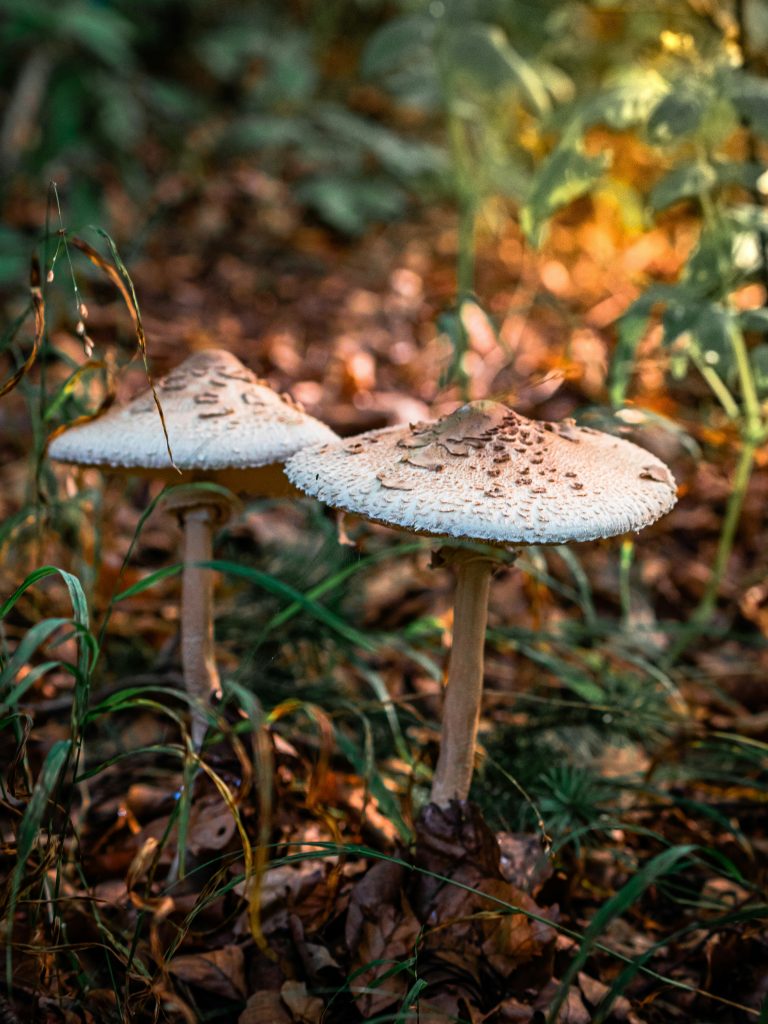
In Ayrshire, the 3000 acres of ancient native woodlands in Craigengillan Estate (one of only 400 UNESCO biosphere reserves in the world) has been the site of many a foraging expedition. I joined Jordan McKeating from Wild Food UK on one of his pre-course walks to find out how a simple walk in the woods can be transformed into a culinary treasure hunt, as we searched for the abundance of edible plants and mushrooms found in nature. I started by asking him what he considers to be the main benefits.
“From a wellbeing point of view, you’re outside so you’re getting fresh air and spending time in nature which we know from research does wonders for our mental health. And when you’re foraging, you’re exercising; you’re walking up big hills and sometimes covering miles over different terrains. The food is all really good for you too because it’s all organic – there’s no plastic wrap on it and no air miles. With foraging, you’re getting a varied diet by enjoying what’s available at the time, so today might be raspberries and chanterelles, but tomorrow could be plums and apples…
“In Scotland, autumn brings an abundance of mushrooms for foraging, along with the different fruits of the season. We can find a lot of apples, sloes, berries and nuts. We don’t get a wide variety of nuts, but we do get quite a lot of walnuts, hazelnuts and even acorns which, once they’re processed, can be made into flour.”
As we walk and talk, Jordan points out various treasures along the way and we frequently stop and kneel to take a closer look at the different mushrooms as he explains the things to look out for. I ask him about the risks of foraging if you don’t know much about it, and the benefits of learning as part of an organised group.
“When it comes to foraging for mushrooms it’s safety first. There are mushrooms out there which are easy to identify and safe to eat, like a giant puffball – the number one safest mushroom for people to forage because when you see that mass of white you know it cannot be anything other than a puffball. There are some dangers though, and you get things like the death cap which is quite common in the UK. There are certain families and types of mushrooms which have rules with them, but if you know the rules and familiarise yourself with the family (and know how to forage from that family) it’s really safe. There’s not a single mushroom you can’t touch – on courses I’m touching poisonous mushrooms all the time because it’s impossible to know all of them, but unless you physically ingest a portion of that mushroom, it’s quite safe.”
As we wander further into the woods, he stresses that foraging is one of those situations where common sense prevails: for the avoidance of doubt, if you don’t know what it is, don’t put it in your mouth. A glimmer of gold catches his eye and he picks the most perfect chanterelle mushroom I’ve ever seen. We stand and admire its glorious colour and funnel shaped structure for a moment as he tells me a little more about this delicacy which is one of the most sought-after wild mushrooms in the culinary world.
“Chanterelles can’t be mass produced because they’re classed as a wild mushroom which can only grow alongside certain types of trees. There are lots of mushrooms found in the wild which you can’t grow, but there are plenty which you can grow commercially, for example oyster mushrooms and lion’s mane. Chanterelles, however, have a symbiotic relationship with trees, particularly birch trees, which is where you’ll most often find them.”
Maintaining a healthy respect for the land, and nature, is key to foraging, and the aim is not to fill baskets and deplete resources, but rather sample, enjoy and share as we marvel at the world around us.
“What we offer on these foraging courses is an educational day out. We pick a small bag of mushrooms together because there simply wouldn’t be enough for everyone to gather a bag each, and I usually fry them off with butter at the end of the walk as part of a meal we eat together. Today we’ll have cheese and wild garlic scones, mushroom and tarragon tarts and a wild cherry compote – I’ve prepared all of that in advance to show what can be done with foraged foods.”
For those who love nature, and food, foraging in the woods is a dream. I can’t think of a better way to spend a day than wrapping up against the cold, heading out into the crisp autumn woods, and searching for ingredients which can be foraged and gathered and transformed into a meal to be enjoyed back home by the warmth of the fire with the people I love. There is surely no greater pleasure.