The Royal Castle of Dundonald



Dane Love
Dundonald Castle is a massive pile crowning the prominent Castle Hill above the village of the same name. It can be seen for many miles around – a viewpoint on the hill indicates the wide extent – and yet it is hidden from the sea, the hill of Old Bank protecting it from the coast. The present ruins date from the third castle to occupy the site, and before stone defences were built the hill was a fort of the Dark Ages. During excavations some vitrified stonework was discovered and evidence of occupation from before 2000 BC. The first castle was erected in the late-twelfth century, constructed mainly of wood. The next castle was erected in the late-thirteenth century by Alexander Stewart, but it was destroyed in the Wars of Independence. The well from this building survives outwith the present castle, and part of a round tower is incorporated in the north-west corner.
The present castle was erected around 1371, when King Robert II was crowned. Originally it was three storeys high. The lower vault, which is 37 feet tall, formerly had a wooden floor halfway up. A modern platform occupies the approximate level. This ground floor apartment was used for storage. The upper floor was the laigh or low hall, with its great barrel-vault a distinctive feature, claimed to be the largest in Scotland. On two sides are flues for braziers. One of the windows has two carved heads on corbels, representing a mediaeval gentleman and his lady. On the north wall there was probably a timber balcony for the minstrels’ gallery, having its own toilet built into the thickness of the stone wall.
A modern steel spiral stair in the south-east corner leads up to the second floor, where the remains of the Great Hall once was. Although it is now roofless, its former grandeur is still apparent, as the missing vault had stone ribs and ornate arches, parts of which still adorn the walls. The Great Hall measured 60 feet by 25 feet, making it the second largest in Ayrshire, after Turnberry Castle. Its uppermost point would have been 24 feet above the floor level. Just as the spiral stair enters the great hall, one can admire the small lobby with the remnants of a ribbed ceiling and a slop chute. There is no evidence of a floor over the Great Hall, but there may have been bedrooms there.
Alternatively, the bedrooms could have been located in the southern extension which was added around 1450. Here also was the ground floor prison, with fireplace, and a dark pit below, now accessed by a ladder. From the upper floor and staircase one can look eastward over the former outbuildings, one of which is thought to have been the chapel. The line of what would originally have been a tall wall surrounding a courtyard can be seen on the ground.
It is worth walking around the exterior of the tower to spot the six heraldic shields built high on the walls, the stone with a pair of lions carved on it, and two heads on the north-east corner.
The Stewarts (originally FitzAlans) owned Dundonald from around 1150 until 1482 when it was occupied by the Cathcarts. In 1371 Robert Stewart, 7th High Steward of Scotland, succeeded as King Robert II. The royal family often visited Dundonald thereafter, and Robert II virtually retired here, dying at Dundonald in 1390. Whilst king, Robert often signed charters at Dundonald. Robert II also frequently stayed at Dundonald, and it remained associated with the monarchy until the reign of James V.
In 1526 the castle passed to the Wallaces, but by 1650 was in ruins, the family having moved to Auchans Castle nearby. Tradition states that some stone was taken from the castle to build the new house. James Boswell and Samuel Johnson visited the ruins in 1773, Johnson laughing ‘till the ruins echoed’ at the thought of the seat of ‘King Bob’. The Cochrane family, the chief of which has the title Earl of Dundonald, acquired the ruins in 1638.
The castle was placed in the care of Historic Scotland’s predecessors in 1953 by the 13th Earl of Dundonald. After excavations on site and some restoration work (it is fun looking for the 1990s dates carved on modern stones) the castle opened to the public.
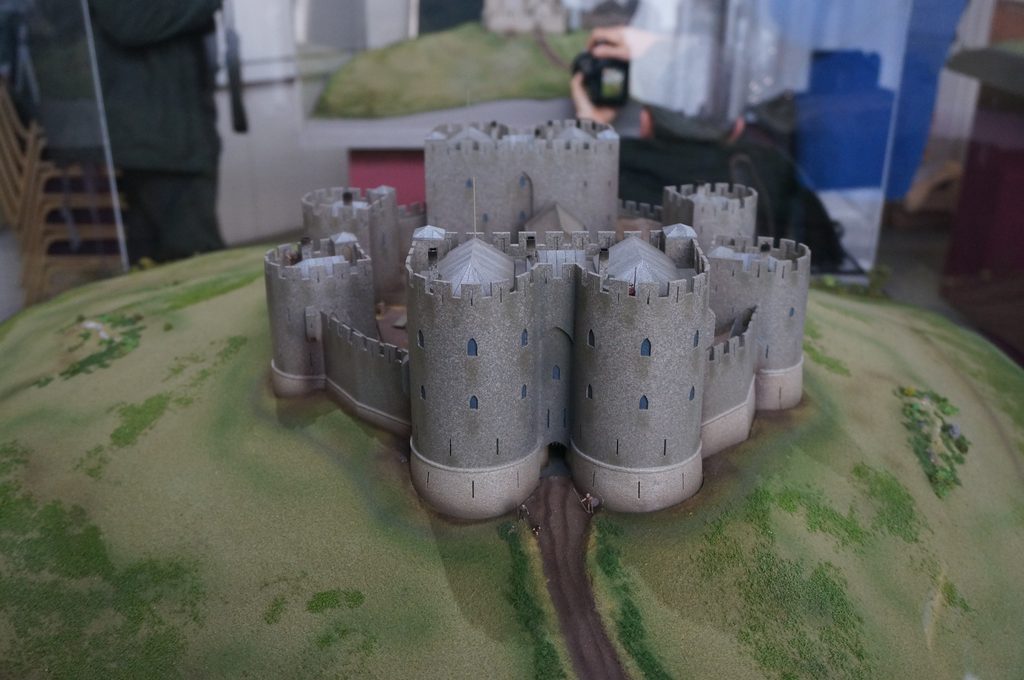
The Friends of Dundonald Castle operate the visitor centre at the foot of the castle hill in Winehouse Yett. Here one can visit the small museum where the story of the castle is told with images and models. There is also a small café, and the Friends group runs various events each week which are popular. The visitor centre was opened in 1998 but has been so successful that plans are in place to extend it.
Dane Love has written extensively on the history of Ayrshire. His most recent book is Scottish Castles, published by Carn Publishing. Find out more at
www.dane-love.co.uk