Ayrshire’s Greatest XI



1960s to date
David Milloy
We think that it’s time that our little county reflected with pride on the achievements of our local sportspeople. And what better way to start than by compiling a team of noted footballers born in Ayrshire?
To make our task a bit easier we’ve only picked players who came to prominence between 1960 and today’s date and we’ve also insisted that every player in our team was born in Ayrshire. But although that means we’ve had to leave out some great players, we reckon that the lads we’ve chosen will do us proud.
First, though, we need a manager. And in spite of the likes of George Burley and Steve Clarke having done well, there’s really only one man we could pick:
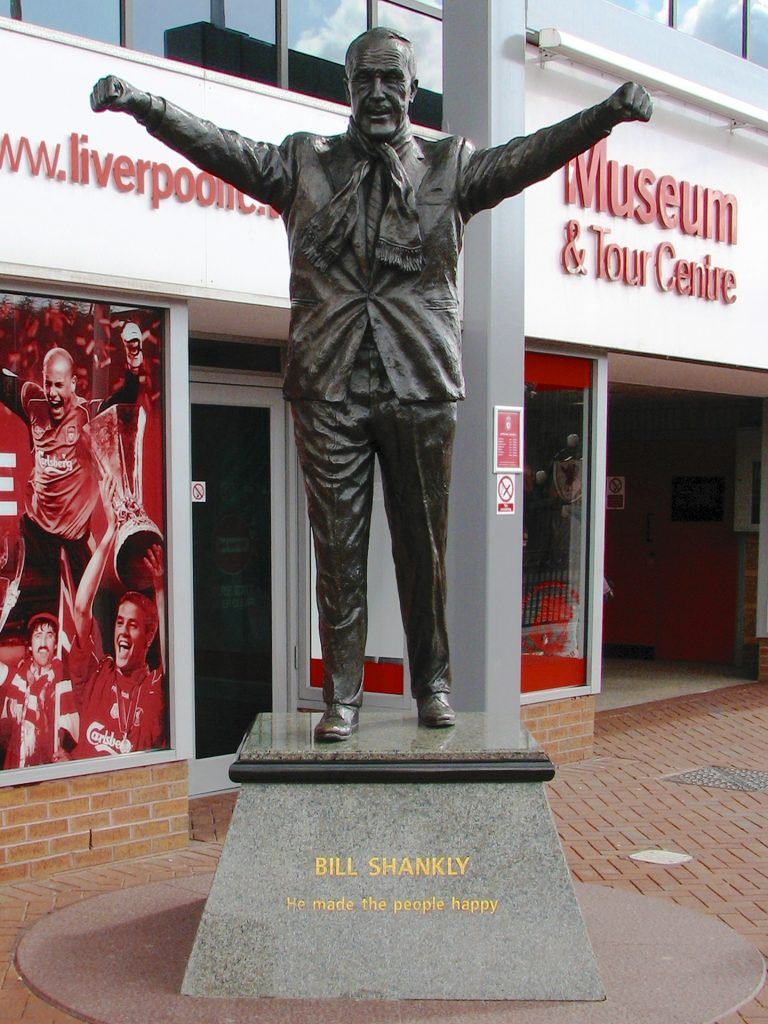
Bill Shankly, manager
Born in the now defunct mining village of Glenbuck, Shankly became a miner at 15 but his skill as a player led to him being signed by Carlisle United while still in his teens. He moved to Preston North End shortly thereafter and stayed with the club for 16 years, winning the FA Cup as well as five Scotland caps prior to World War II.
Shankly moved into management in 1949 and got his big break a decade later when he was approached by Liverpool, then in the English Second Division (the equivalent of today’s EFL Championship). What happened next is the stuff of legend. Aided and abetted by a talented coaching staff which included two future Liverpool managers in Bob Paisley and Joe Fagan, Shankly set about the task of resurrecting the club’s fortunes. His attention to detail and focus on fitness saw Liverpool return to the First Division in 1962, and he thereafter led them to three First Division titles, two FA Cups, and the UEFA Cup. He was still at the height of his powers when he retired in 1974 at the age of 60.
Shankly was adored by fans of Liverpool FC for his love of the club and the city, his personal warmth, his wit, and his humility. More than that, he is widely regarded as the one of the greatest football managers of any era. Not bad for a lad brought up in the miners’ rows in a remote Ayrshire village.
Manager in place, we now need a goalkeeper. This is a tough one, with Peter McCloy and Tommy Lawrence each putting forward a strong case for inclusion. We rate them both highly but we can choose only one, and it’s…
Peter McCloy, goalkeeper
Born in Girvan and nicknamed ‘The Girvan Lighthouse’ on account of his height, McCloy rose to prominence with Motherwell, for whom he signed at the age of 17. He made his first team debut a year later and remained with the club for a total of six years before being transferred to Rangers in 1970.
He would spend the next 16 years at Ibrox, playing 545 games for the club and seeing off challengers to his position in the form of Stewart Kennedy and Jim Stewart. During his time at Ibrox, he won two Scottish First Division/Premier Division titles, four Scottish Cups, four Scottish League Cups, and the European Cup Winners’ Cup in 1972. And to add to that enviable record, he also played four times for Scotland.
Of course, there’s no point in having a great goalkeeper if our defenders aren’t up to much, so we’ve selected four men whose defensive prowess is of the highest order.
Working our way across the defensive line, we have:
George Burley, right back
Born in Cumnock, George Burley joined Ipswich Town FC at the age of 16. He made his first team debut for the club a year later in a match against Manchester United, when one of his tasks was to mark United’s errant superstar George Best.
Burley’s time at Ipswich coincided with the most successful period in the club’s history. He was a mainstay of the team that won the FA Cup in 1978 but injury prevented him from taking the field in either of the two legs of the 1981 UEFA Cup final, in which Ipswich emerged as the victor. Ipswich came close to winning the English First Division title in the same season but lost out to Aston Villa on the final day of the season. They would again finish in the runners-up slot the following season, this time to Liverpool.
Burley moved to Sunderland in 1985. This was followed by stints at Gillingham and Motherwell, after which he returned to Ayrshire in 1991 to become the player-manager of Ayr United.
As a player, Burley was versatile and had a well-balanced range of skills, being comfortable in both defensive and attacking situations. He won 11 caps for Scotland.
Gordon McQueen, centre back
Kilbirnie man Gordon McQueen was unquestionably one of Britain’s best football players during the 1970s and early 1980s. His professional career began at St. Mirren in 1970 but two years later he moved to one of the biggest clubs in England, Leeds United.
McQueen played a handful of first team games in his debut season for the club before tying down one of the two centre half berths the following season. Leeds won the First Division title that year and reached the final of the European Cup the following year.
McQueen stayed with Leeds until 1978, when he was transferred to Manchester United. He remained at Old Trafford until 1985, winning the FA Cup in 1983. Knee injuries had, however, taken their toll and he retired from football in 1986.
Injury prevented him from playing for Scotland in the 1978 World Cup. His dominant and courageous presence in the centre of defence was sorely missed as Scotland made an early exit from the tournament. He won 30 Scotland caps between 1974 and 1981 and scored five goals for the national side.
Ian Ure, centre back
Born in Ayr, Ian Ure played in the Ayr Academy rugby team that also featured Ian McLauchlan, who would later captain Scotland at rugby union and play for the British & Irish Lions, as well as Mike Denness, who would become the first Scotsman to captain England at cricket.
Ure’s professional footballing career began at Dundee in 1958. He was part of the Dundee side that won the Scottish First Division (then the top division in Scotland) title in 1962 and reached the semi-final of the European Cup in 1963. A talented ball player who preferred to pick his passes rather than hoof the ball upfield, Ure was first capped for Scotland whilst at Dundee and went on to play 12 times for his country.
He was transferred to Arsenal in 1963 but injuries limited his appearances to an extent. He joined Manchester United in 1969 and appeared for them in a total of 68 games before moving back to Scotland to join St. Mirren in 1971. He played in only a handful of games for The Buddies before hanging up his boots.
Steve Nicol, left back
Born in Troon, Nicol played for Ayr United for two seasons before being snapped up by Liverpool in 1981. He made his first team debut the following year and became a regular starter in 1983, being part of the Liverpool team which won both the First Division title and the European Cup in the 1983/84 season. The following season saw him earn the first of 27 Scotland caps.
As a key member of the Liverpool team, Nicol won the First Division title again in 1985/86 and repeated the feat in 1987/88 and 1989/90. He also tasted victory in the FA Cup three times and won the Football Writers’ Association Player of the Year in 1989.
Nicol stayed with Liverpool until 1994 and kept playing professional football until 2001. A versatile, two-footed player who was just as good going forward as he was in defence, Nicol played mostly at right back but also turned out for Liverpool at left back, centre back, and in midfield. We don’t have a specialist left back but with a player like Steve Nicol on hand we don’t need one.
As we’ve chosen a 4-3-3 formation, we’ve selected a midfield trio that covers a lot of bases in terms of attributes. Let’s meet them, starting with our midfield ball winner, a man who relishes the physical side of the game:
Steve Nicol, left back
Born in Troon, Nicol played for Ayr United for two seasons before being snapped up by Liverpool in 1981. He made his first team debut the following year and became a regular starter in 1983, being part of the Liverpool team which won both the First Division title and the European Cup in the 1983/84 season. The following season saw him earn the first of 27 Scotland caps.
As a key member of the Liverpool team, Nicol won the First Division title again in 1985/86 and repeated the feat in 1987/88 and 1989/90. He also tasted victory in the FA Cup three times and won the Football Writers’ Association Player of the Year in 1989.
Nicol stayed with Liverpool until 1994 and kept playing professional football until 2001. A versatile, two-footed player who was just as good going forward as he was in defence, Nicol played mostly at right back but also turned out for Liverpool at left back, centre back, and in midfield. We don’t have a specialist left back but with a player like Steve Nicol on hand we don’t need one.
As we’ve chosen a 4-3-3 formation, we’ve selected a midfield trio that covers a lot of bases in terms of attributes. Let’s meet them, starting with our midfield ball winner, a man who relishes the physical side of the game:
Billy Gilmour
Born in Irvine and brought up in Ardrossan, Billy started out as a youth at Rangers before being snapped up by Chelsea as a 16-year-old in 2017.
He made his first team debut for Chelsea, a club with no shortage of talented footballers on their books, in 2019 and went on to play in 22 first team games for the club. He was loaned out to Norwich City in 2021 before securing a permanent move to Brighton & Hove Albion the following year.
His Scotland performances were no doubt part of the reason why Italian club Napoli signed him in the summer of 2024. And at the time of writing, Napoli sit at the top of Serie A, Italy’s top football league.
He’ll do nicely.
How about an attacking midfielder, someone who likes to get forward as often as they can? Well, we’re lucky enough to have the very man in our line-up. His name is…
Craig Burley
The second member of the Burley clan (Craig is George’s nephew) to make our team, Craig Burley was born in Ayr and brought up in Cumnock.
Burley joined Chelsea in 1989 and made his first team debut in 1991, becoming a regular starter in 1993. He played in the 1994 FA Cup final, which Chelsea lost, but didn’t feature in the squad when Chelsea lifted the Cup in the 1996/7 season.
He moved to Celtic in 1997 and won both the Scottish Premier Division title and Scottish League Cup in his first season with the club. He played 64 times for Celtic, scoring 20 goals, before moving back to England to ply his trade with Derby County in the English Premier League. Unfortunately, injury blighted his time at Derby and he left the club in 2003. He played on for a further season before hanging up his boots in the summer of 2004.
Burley won 46 caps for Scotland and holds the distinction of being the last player to score for Scotland at the World Cup finals, courtesy of his goal against Norway in 1998.
Goals win games, so we’ve chosen a front three who, in football parlance, know where the net is. So without further ado, here they are:
Steven Naismith, right wing
Born in Irvine and raised in Stewarton, Naismith signed his first professional contract with Kilmarnock and made his first team debut at the age of 17.
He broke into Kilmarnock’s first team squad in the 2004/5 season, making 24 league appearances for the club. His star rose further in the following two seasons, attracting interest from both Rangers and Celtic.
He joined the Ibrox club in August 2007 and made an early impact before sustaining the first of two serious knee injuries. When fit, Naismith made a valuable contribution to the team, and this was recognised when the club offered him a lengthy extension to his contract in 2010. He moved to Everton in 2012 following the financial crisis and collapse of Rangers’ owners.
Naismith’s time at Ibrox yielded a number of honours – three Scottish Premier League titles, two Scottish League Cups, and a Scottish Cup – but there would be no more trophies during the rest of his playing career, which saw him turn out for Everton, Norwich City, and Hearts. After retiring as a player in 2021, he moved into management, rising through the ranks at Hearts to become the club’s manager.
His key attributes as a player were a shrewd football brain, commitment, and an eye for goal. He was versatile too, and was deployed in a variety of forward positions, including on both wings. He’ll be playing on the right wing for us.
On the other wing, we have the most decorated player in our side:
Bobby Lennox
Born and brought up in Saltcoats, Lennox was playing junior football when he was signed by Celtic in 1961. A very pacy, goalscoring left winger, Lennox stayed with the Parkhead club until 1978, when he joined Houston Hurricane in the North American Soccer League. He returned to Celtic a mere six months later and played on for a further two years before retiring in 1980.
Lennox ended his playing days having scored 167 league goals for Celtic, in addition to a further 106 in other competitions. He won 25 major honours with Celtic, including the 1967 European Cup and 11 Scottish First Division/Premier Division titles.
He also won ten caps for Scotland and scored three goals for the national team, one of which came in the famous 3-2 victory over reigning World Cup holders England at Wembley in 1967.
Awarded the MBE in 2005, Lennox was further honoured when a statue of him was unveiled in Saltcoats in 2018.
That leaves just one position to fill: striker. And we’ve got a better one than Red Robbo:
Kris Boyd
Boyd was born in Irvine and brought up in Tarbolton. He signed his first professional contract with Kilmarnock at the age of 16 and made his first team debut two years later. His performances and goal tallies improved year on year, attracting attention from a number of teams. Having turned down several moves to other clubs, he joined Rangers on the first day of 2006.
Boyd’s goal scoring feats continued at Rangers. So much so that he reached 50 goals for the club in fewer games than all but one player in the club’s history. Another milestone came on 30th December 2009, when in the course of scoring five goals against Dundee United he overtook Henrik Larsson to become the player with the most goals to his name in the history of the Scottish Premier League and its predecessor, the Scottish Football League Premier Division. And with his goals came trophies in the form of two Scottish Premier League titles, two Scottish Cups and two Scottish League Cups.
He left Rangers in 2010 for Middlesbrough but it turned out to be the first of several moves that didn’t quite work out. A move back to Kilmarnock in 2012 was, however, a success and led to a move back to Rangers, but lightning didn’t strike twice for Boyd at the Glasgow club and he returned once more to Kilmarnock, where he finished his playing career in 2019.
Boyd’s main asset was his ability to put the ball in the back of the net. In this, he excelled, being quite capable of scoring with either foot and from distance as well as close range. His record of 293 goals in club football, plus seven for Scotland (for whom he played 18 times) speaks for itself.
So that’s Ayrshire Magazine’s team to represent the county against, well, anyone who might wish to take us on. Tell you what, though, we don’t much fancy their chances against our lads…