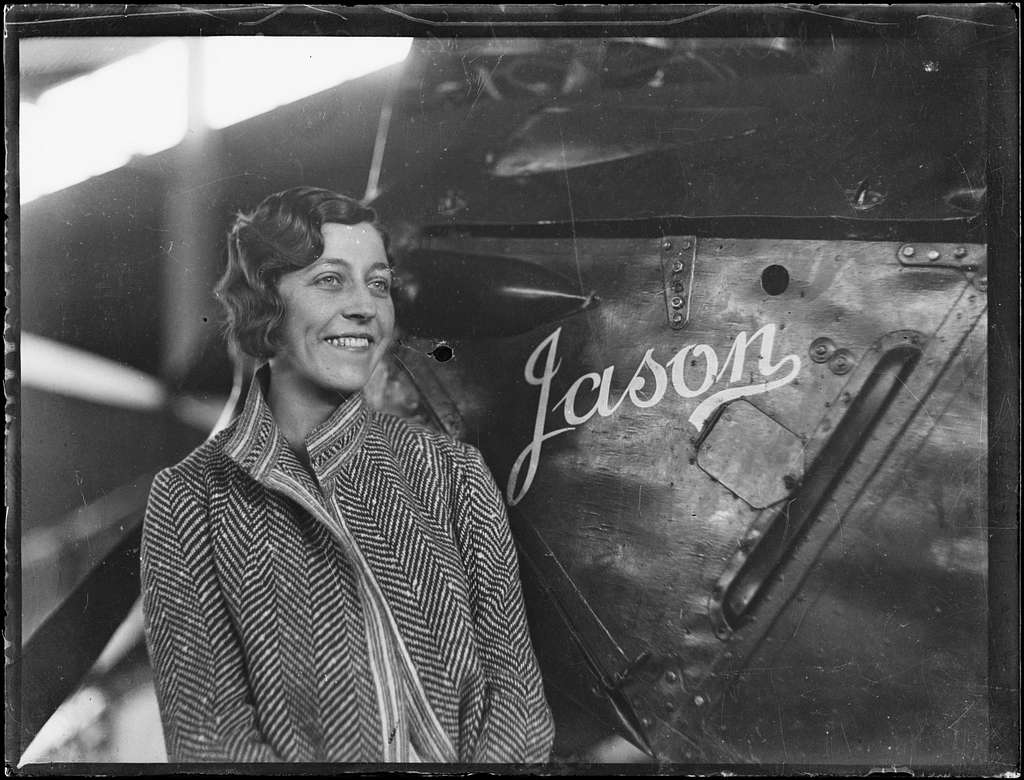
Amy Johnson



The last flight of Britain’s Queen of the skies
David Milloy
One of the most famous pilots of her day. Amy Johnson set various long distance flying records during the 1930s. Indeed, her achievements were at least on a par with those of her American counterpart, Amelia Earhart, with whom she enjoyed a friendly rivalry.
Born in Kingston Upon Hull in 1903, Amy joined a flying club in 1928. She took flying lessons there and gained her pilot’s licence some ten months later. She also undertook instruction on aircraft maintenance and was awarded a ground engineer’s licence.
Although still a very inexperienced pilot, in 1930 she decided to have a crack at breaking the time record for a flight from England to Australia, which stood at fifteen and a half days. She didn’t break the record but she nonetheless became the first woman to fly solo from England to Australia, a feat that was rewarded with a CBE in the King’s Birthday Honours List.
The 1930s saw Amy break a number of records, receive a ticker-tape parade down Wall Street in New York, become the youngest ever President of the Women’s Engineering Society, and be awarded a Gold Medal from the Royal Aero Club. She married Scottish pilot Jim Mollison in 1932. It wasn’t a union destined to last, however, and Amy divorced Jim in 1938.
After war broke out, Amy joined the Air Transport Auxiliary, a civilian organisation which ferried new, repaired and damaged aircraft between factories, transatlantic delivery points, maintenance units, and airfields. Both men and women flew for the ATA during the war, with the latter making up around 10% of the organisation’s pilots.
On 3rd January 1941, Amy left Hatfield aerodrome at the controls of an Airspeed Oxford, a twin-engined monoplane used by the RAF for a variety of tasks, including the training of prospective bomber crews. She broke her journey at Ternhill, arriving at Prestwick, her intended destination, the following day. She was then offered the choice of returning to Hatfield via the overnight train from Glasgow to London or, if she preferred, she could instead deliver another Airspeed Oxford from Prestwick to RAF Kidlington, near Oxford.
Anticipating a slow, uncomfortable journey on an overcrowded train (something that hasn’t changed much in the last 80 years), Amy took the latter option – she would fly the Oxford to RAF Kidlington.
The Oxford normally carried a crew of three or more, but could be – and was on delivery missions like that being undertaken by Amy – flown by a sole pilot. The aircraft issued to Amy had not yet been fitted with either an HF radio or the recently developed Identification Friend or Foe (IFF) equipment.
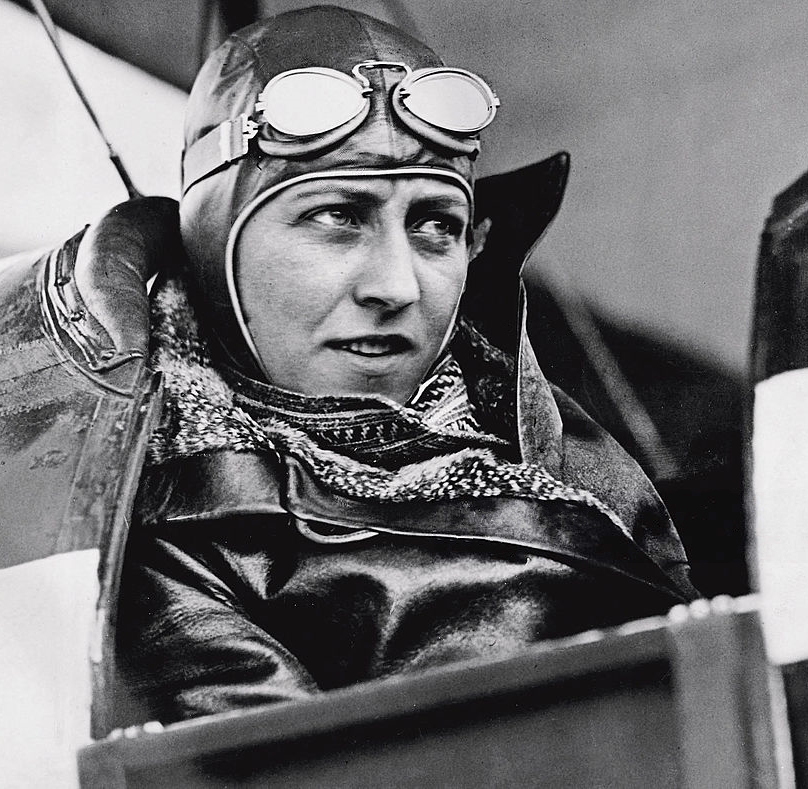
Amy departed Prestwick on 4th January, 1941, but instead of flying directly to RAF Kidlington, she broke her journey at RAF Squires Gate, near Blackpool. This enabled her to visit her sister and spent the night in her Blackpool home.
The weather was poor the following day but in spite of being advised by the Duty Officer not to make the journey in the prevailing conditions, Amy decided to go ahead with her flight to RAF Kidlington, no doubt expecting that conditions would improve during the course of her flight.
Her optimism was unfounded, as the weather actually got worse. Although there had been no cloud at Squires Gate, the Midlands and South-east of England were blanketed by low level cloud, the base of which varied between 800 and 2000 feet. Amy was therefore unable to use ground features as a navigational aid, and the lack of a radio in her aircraft meant that she was unable to contact a ground station for a positional fix. The lack of IFF was another worry, as her aircraft was unable to transmit the signal which showed it to be friendly rather than hostile.
Although Amy could have returned to Squires Gate, she chose to press on. No one knows quite what happened during her flight but the end result was that Amy ended up well off course, having both overshot and flown somewhat to the east of her intended destination. One theory is that she had deliberately headed east to the flatter, lower-lying ground of East Anglia, where descending through the clouds would be less risky.
Whatever the cause, Amy found herself over the Thames Estuary near to Herne Bay in Kent, at about 3.20 pm, some 4.5 hours after her departure from Squires Gate.
The generally accepted version of what followed next was that Amy, her aircraft’s fuel exhausted, took to her parachute, landing not on dry land but in the cold waters of the Thames Estuary. Although the sea state was poor, with strong tides and steep waves, Amy was seen in the water, alive and shouting for assistance, by crew members of ships in a passing convoy. An attempt was made to rescue her by the crew of the nearest ship, HMS Haslemere, by throwing ropes for her to grab. Amy was, however, unable to reach the ropes and vanished from the sight of those on the ship, never to be seen again.
Amy was not, however, the only victim. When sailors reported seeing what they thought was a second person in the water, Lieutenant Commander Walter Fletcher, the captain of HMS Haslemere, dived into the water and made an heroic attempt at rescue. It seems, however, that the second person was in fact Amy’s suitcase, which somewhat resembled a person bobbing in the waves. Tragically, Lt. Commander Fletcher lost consciousness in the intense cold of the water and died several days later from the effects of hypothermia.
That’s the generally accepted version of events but there are, however, other theories.
One theory mirrors that surrounding the disappearance of Amy’s rival and friend, Amelia Earhart, in that it’s said that Amy had been engaged on some sort of secret mission that day, most likely dropping an agent into, or picking up an agent from, German-occupied France. In reality, this theory makes little sense: carrying out such a mission in daylight would have invited certain failure, particularly since Amy’s aircraft, with its bright yellow underside would have stood out like a sore thumb. Not only that but it was slow and unarmed and would have been easy pickings for the Luftwaffe. Covert missions tended to be flown at night by specially trained pilots in black-painted Lysander aircraft which, unlike the Oxford, needed only a short strip of ground on which to land and take off.
Another theory suggests that Amy was shot down by British anti-aircraft fire, having failed to fire the correct colour of recognition flares when challenged. The problem with this theory is the claim that the challenge was made to Amy by radio, an impossibility if her aircraft wasn’t fitted with a radio. If we treat the claim that she was contacted by radio with a pinch of salt, the theory that her aircraft was hit by friendly fire becomes more plausible – the Thames Estuary was an area which often attracted the attentions of Luftwaffe aircraft, and it’s possible that her aircraft was mistaken for a German one by anti-aircraft gunners. That said, the most likely explanation is the simplest – her aircraft simply ran out of fuel.
Amy was a pioneer in her field. She was talented, brave, and determined. Given that the mission on which she lost her life commenced at Prestwick, it would be right and fitting that her life and the service she performed for her country should have some sort of permanent marker at Prestwick Airport. Perhaps someday it will.