SEALS, OTTERS AND THE ISLE OF PLADDA


A personal portrait of Kildonan
Chris Palmer
“Have we heard yet, Mum?”
The resigned shake of the head ensured that two more days at least would pass before the children dared to ask again.
It started in February. Always the worst month for weather on the Fylde coast, when summer, and the west coast of Scotland, seemed so far away. We had made our request, stating our preferred week or, if we were lucky, a fortnight. An anxious wait transpired before we heard. In the distant past, a letter or a telephone call, more recently a text message.
“We’ve got it. First two weeks in August.”
Cue excited chatter, plans and memories.
The truth was that we always seemed to secure the time we wanted. A cottage by the sea, owned by friends of the family, who knew how much it meant to us. The wait to find out was part of the ritual of our Arran holiday. Going every year seemed to matter more than anything. What was it that drew us back every year? And not just to Arran itself, the tiny hamlet of Kildonan, at the south of the island. The same island, the same small community, the same cottage.
We turn the corner in the road down to the village. There is a long, slow and twisty descent. This, however, is our first sight of Kildonan and the Isle of Pladda. We pause and take in the view. I want to freeze this moment of re-connection. The feeling is strong and deep. But I am just a newcomer to this experience. Merely a few decades. For my wife the connection is over half a century, and for her family, much longer than that.
How to describe it? For a start, if you followed the circular road around the island, you could easily miss it. Going clockwise, make sure you take the left turn at Dippin, about twelve miles from Brodick, and head down the steep hill. The hamlet is strung out over a mile or so.
When I first visited Kildonan nearly forty years ago, the community was split into two parts, joined by the Shore Road. It featured two hotels, a village hall, a straggle of private houses, including the former schoolhouse, a village shop and a church halfway up the Manse Brae, a punishing climb for anyone walking to church.
A gradual change has occurred over the years. Only one hotel is left. The church (where our son was baptised) is now a distinctive private house. The village shop closed a decade ago. The arrival of mains water encouraged farmers to sell pockets of land by the shore and a string of detached houses was gradually built bringing the two halves closer together.
Our family has observed the changes with intense proprietorial scrutiny, fearing a few years ago that the community might be teetering on the brink of extinction, but more recently admiring its resilience.
At the cottage we rented for years, alighting from the car for the first time was a visceral experience. I would hear and feel on my face the insistent breeze. Reeds gently rustled. Seaweed and salt impregnated the air. Our children, let off the leash, would hurtle down the short slope of a field to the beach, with the adults soon following. We felt that we knew every rock, tide pool and lonely piece of driftwood. There was, however, every year, something new and unexpected. A fish crate washed up in a storm. The skeleton of a gannet that, judging by its crushed beak, mistook the depth of the sea by the shore. The charred remains of a recent bonfire.
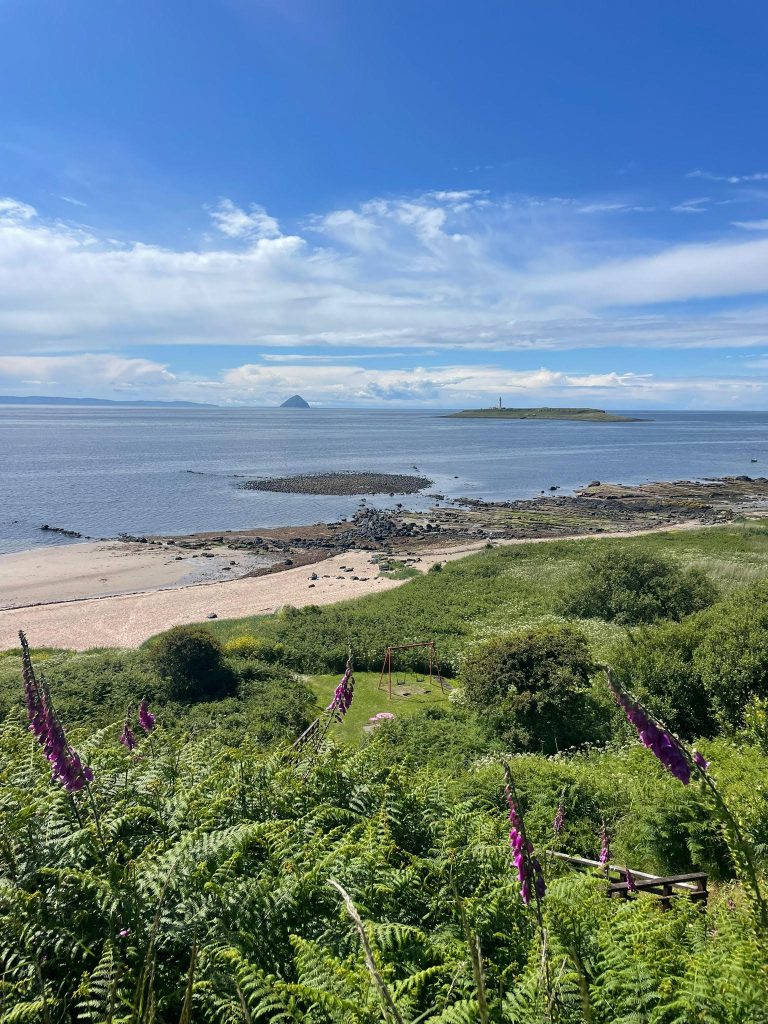
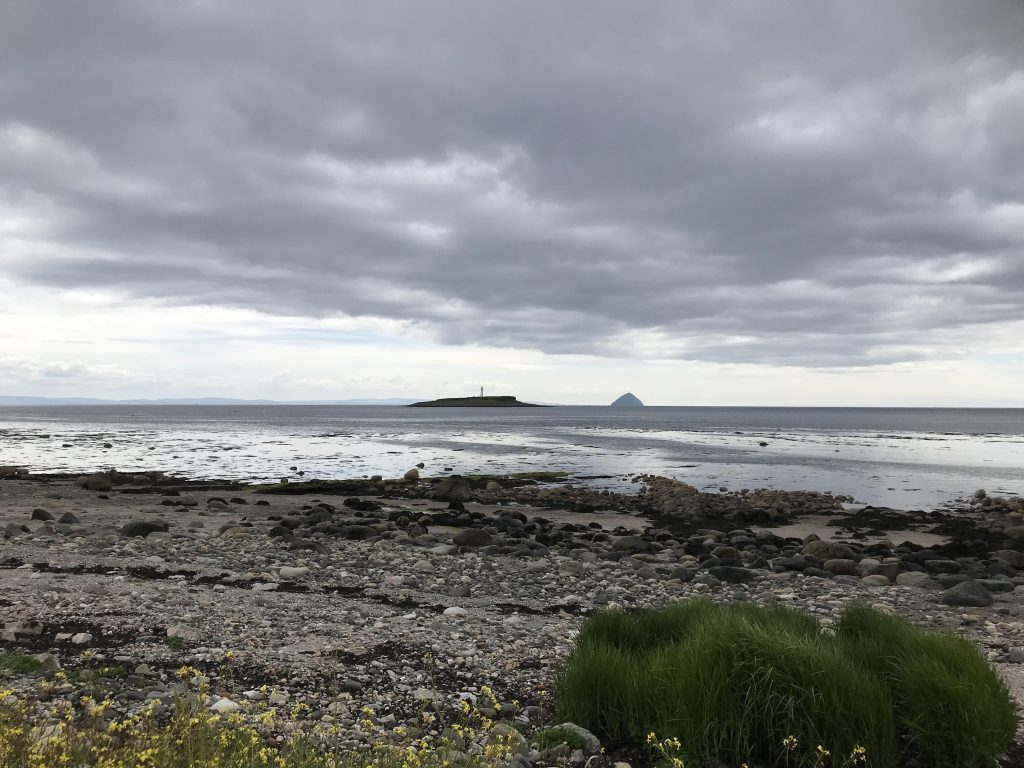
Few views surpass that from the cottage. A field stretches down to the shore. A stretch of beach. As the tide recedes a large area of rocks and rock pools is revealed, a source of unmitigated delight for our children for so many years. A mile out to sea the Isle of Pladda, with its lighthouse and shallow cliffs, dominates the view. In the distance, Ailsa Craig (Paddy’s Milestone), juts defiantly out of the sea. Finally, on the horizon, we can make out the mainland. On a clear day we can just make out Turnberry. We watch the ferries, yachts and occasional naval boats. Every hour and every day is distinctive with, of course, the weather frequently having the final say.
Such is our emotional investment in this special place that a few years ago we forsook our rented cottage, emptied our savings and bought one of our own, at the other end of the village. Now we see seals, otters and, if we are lucky, the fin of a basking shark. A daily walk takes us beyond the Shore Road towards Bennan Head. There is a familiar path or the beach itself. Oystercatchers, redshanks, curlews and eider duck frequent the shore. A buzzard might circle overhead. Seals bask on rocks, oblivious to our presence unless we stray too close.
Our goal is a particular sheltered cove where we sited a bench commemorating my wife’s late mother, who visited this place most of the eighty years of her life. A few years later the plaque was amended to include her aunt who shared the same emotional attachment. Both would be immensely proud that every year we walk to this favourite spot, past gorse, rosebay willow herb, bracken and nettles to sit on the bench and absorb this favourite view, together with the birds, flora and fauna they knew so well.
We rarely stray from our familiar Kildonan patch. We will, however, have at least one round of golf at our favourite course at Shiskine, on the other side of the island. Twelve challenging holes on a course hugging the coastline, gazing across at the Mull of Kintyre. On our way we will pass the new distillery at Lagg, an important new investment on the tourist trail in the south of the island.
One year, our fortnight coincided with the Arran Highland Games. Brodick becomes swollen with visitors for the day, along with competing pipe bands who march from the ferry to the site of the games, large burly men in kilts ready to toss the caber, and tartan clad dance troupes limbering up to compete in Highland dancing. There are open short distance races. Our daughter, a sprinter in her teens and now aged thirty-one, risked pulled muscles and public humiliation by entering the senior one hundred metres dash. With minimal preparation, barefoot like a latter-day Alf Tupper, but no fish and chips, she was relieved not to finish last, but missed out on the prize money.
So, what does draw us back every year? The warmth and familiarity of a small community in which we feel, ourselves, to be an integral part. The opportunity every year to pause for breath. The mainland is just about an hour away, but it feels so much further as soon as we arrive. Few would dispute that the view has a matchless depth and beauty. It is preserved in countless cinefilms, video recordings and family photographs over the years.
Maybe the sheer simplicity of our life once we arrive ensures that its lure is undiminished. We know what to expect. As we arrive every year we anticipate and silently hope that nothing, yes nothing, will have changed.